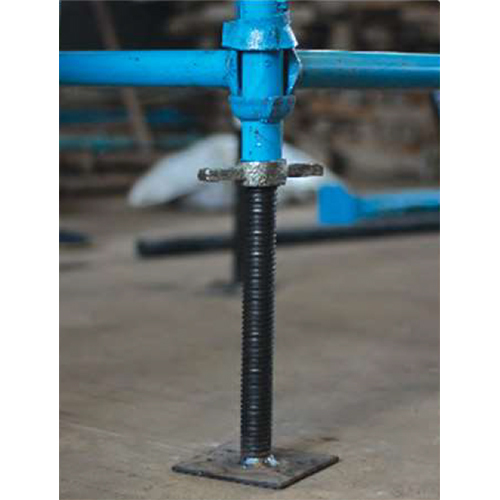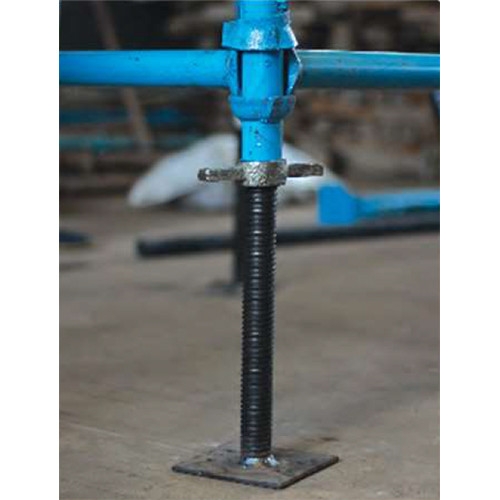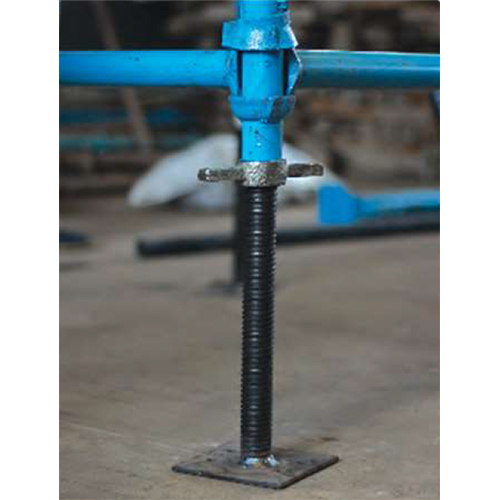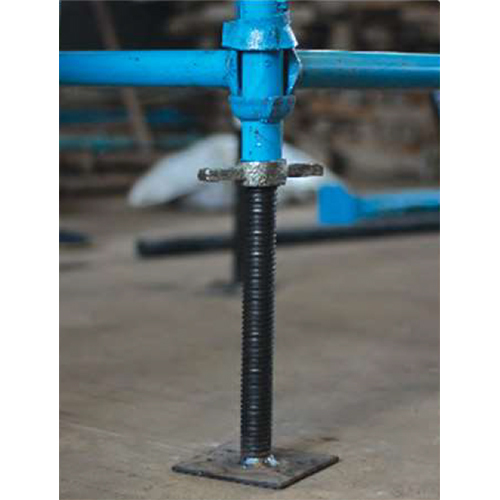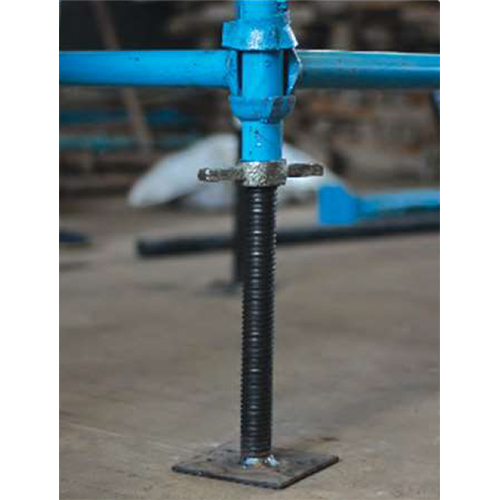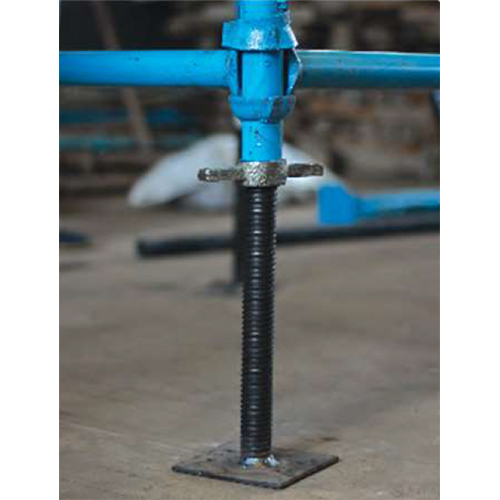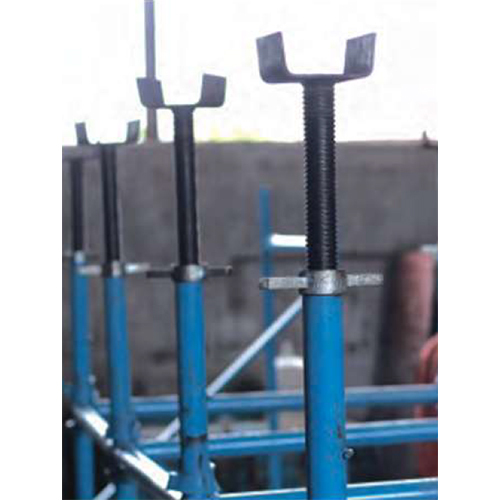
A Base Jack is an adjustable scaffolding component used at the bottom of vertical supports (standards) to create a stable, level foundation, especially on uneven ground, by using a threaded rod and nut to fine-tune height, ensuring safety and proper load distribution for construction structures. It consists of a base plate, threaded stem, and nut, allowing for precise leveling and integration with various scaffolding systems like Cuplock or Ringlock.
Key Features & Function:
Leveling: The threaded screw mechanism allows workers to raise or lower the scaffold standard to achieve a perfectly level platform, crucial for safety.
Stability: Distributes heavy vertical loads from the scaffolding system down to the ground, preventing sinking and structural instability.
Adjustability: Provides variable height adjustment, accommodating irregularities in site conditions.
Material: Typically made from high-strength steel, often with a galvanized or painted finish for corrosion resistance and durability.
How it Works:
Place the base jack's solid base plate on the ground.
Insert the scaffold's vertical tube (standard) onto the threaded rod.
Rotate the jack nut (clockwise to raise, counter-clockwise to lower) to adjust the height of the standard.
Verify the scaffold is level and plumb before proceeding with erection.
Applications:
Used in commercial, residential, and infrastructure projects.